Living Hope Mission for Pakistan
Working from
Zero to Make Them Hero
Uriah Welfare Organization (UWO) is a Christian faith-based nonprofit founded by Evangelist Patras Boota. Born into brick kiln slavery, Patras broke the cycle through education and faith. He established UWO to serve the poorest of the poor especially brick kiln families and street children with practical love in action (1 John 3:18).
Our Vision: A Pakistan where no child works in brick kilns, every child attends school, and families live in freedom, dignity, and hope.
Through Jesus Christ, we liberate families from modern-day slavery, educate children, plant churches, and empower the poor in Pakistan.
The Living Hope Mission for Pakistan
Core Mission Objectives
Missionary Training Program
Objective: Equip and deploy effective missionaries.
- Train up to 300 students annually in biblical studies, leadership, and field practice
- Deploy graduates to local and regional mission fields
Impact: More trained, field-ready missionaries actively serving communities
Executive Summary
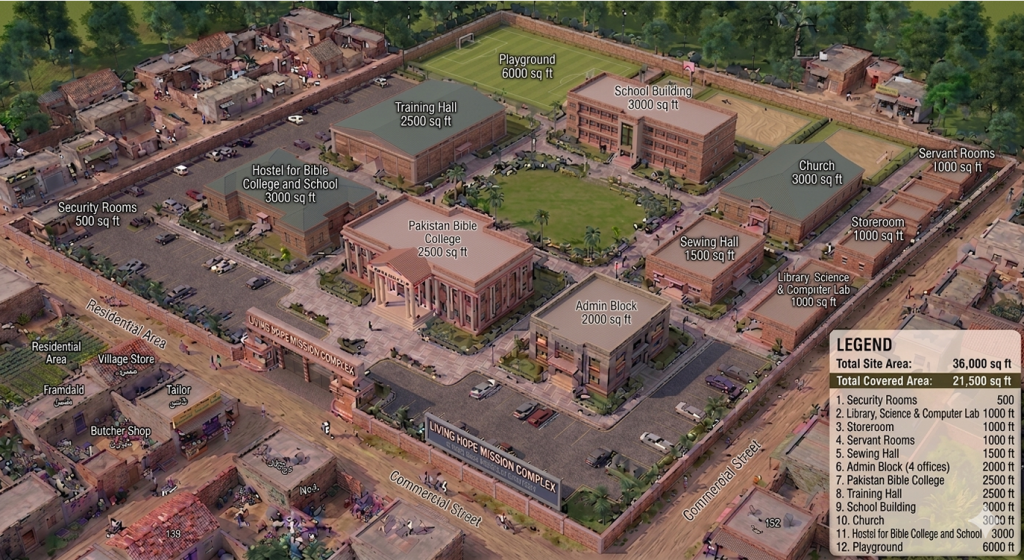
The Living Hope Mission Institute (LHMI), located in Kamas, Lahore, is a self-sustaining Christian missionary training and community development project of Uriah Welfare Organization. The institute is dedicated to equipping and deploying up to 300–400 Christian missionaries and local leaders annually to Unreached People Groups (UPGs) across the Islamic Republic of Pakistan and neighboring 10/40 Window countries including Afghanistan, Iran, China, Tajikistan, Uzbekistan, Turkmenistan, and Azerbaijan.
Financial Sustainability Vision
LHMI is designed to transition from donor dependency to financial independence through internal revenue generation. Income sources include:
- Vocational production income
- Guest house and hospitality services
- Training hall rentals
- IT and textile service contracts
This ensures long-term sustainability and scalable impact.
Self-Sustaining Financial Model
LHMI is designed as a multi-stream social enterprise that strategically leverages its institutional facilities as income-generating assets. This model enables the organization to progressively reduce reliance on external funding by covering operational costs through internally generated revenue.